What if your makeup was not a mask to hide behind, but a final, potent layer of your skincare ritual? For the 71% of British adults who now identify as having sensitive skin, the search for makeup for sensitive skin uk often feels like a gamble between aesthetic performance and inevitable irritation. You likely know the heavy, stifling sensation of traditional foundations that claim to protect yet leave the skin barrier feeling compromised and dull. It’s a frustrating cycle that turns a moment of beauty into a source of physical discomfort.
This guide will show you how to curate a refined makeup edit that respects your skin’s delicate ecosystem while achieving a luminous, high-performance finish. You’ll gain the confidence to decode complex ingredient labels and choose formulations that offer true bio-active synergy. We will explore how to transition your routine into a mindful self-care ritual that ensures your complexion remains calm, radiant, and entirely your own.
Key Takeaways
- Navigate the specific impact of the British environment and hard water on your skin’s natural pH and delicate barrier function.
- Master the ingredient lexicon to distinguish between standard “hypoallergenic” claims and the essential actives required for reactive complexions.
- Refine your application with the “Press and Roll” method to minimise micro-friction and preserve the integrity of your skin surface.
- Discover how to curate a high-performance collection of makeup for sensitive skin uk that harmonises scientific efficacy with a luminous finish.
- Embrace the concept of “Skin Evolution” to transition your daily ritual from reactive management toward long-term resilience and radiance.
Understanding Sensitivity: The British Environment and Your Skin
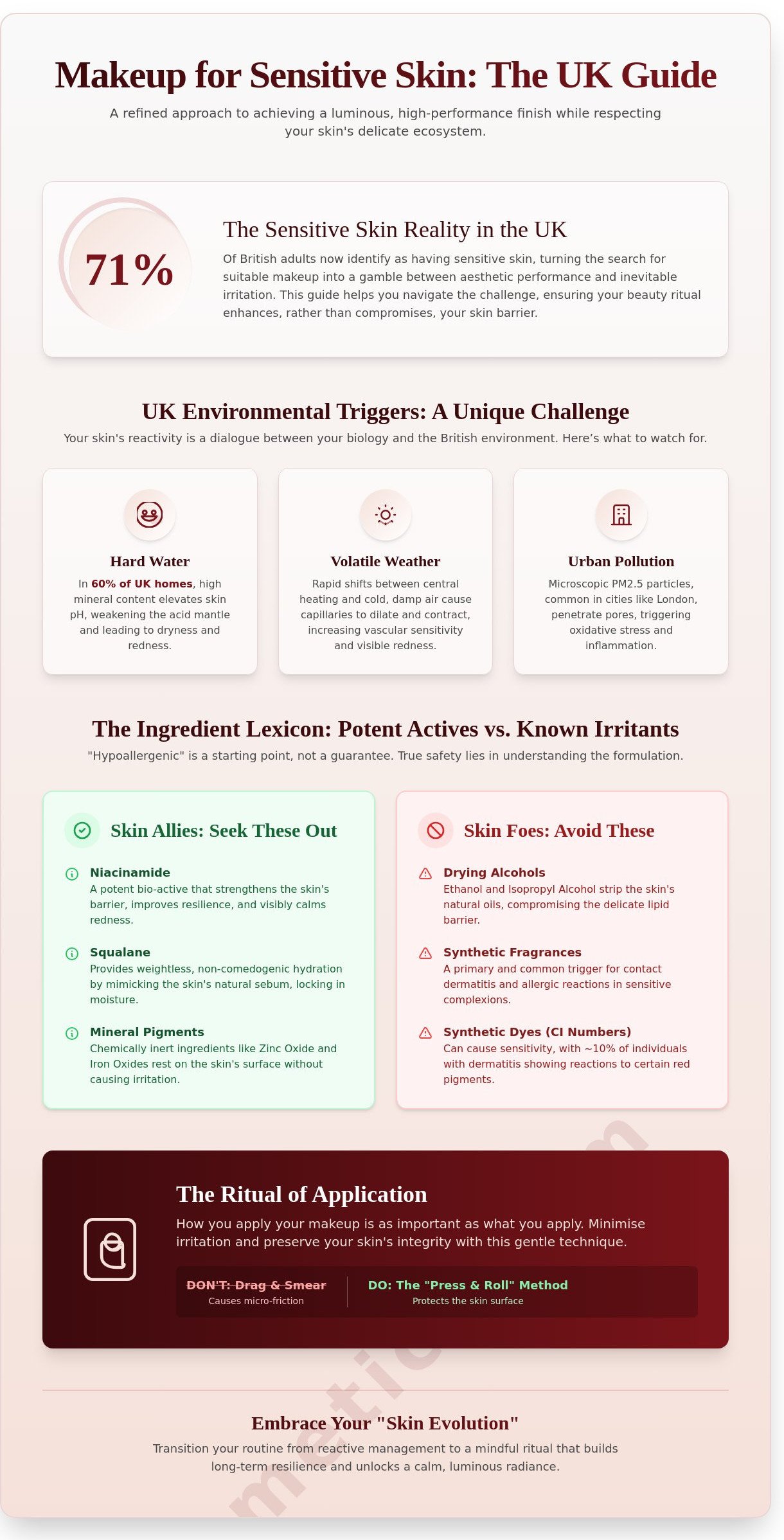
True sensitivity is often an innate, genetic trait. Reactivity, however, is a continuous dialogue between your biology and the British elements. Understanding Sensitive Skin requires a close look at external stressors that compromise the complexion. In the UK, approximately 60% of households are supplied with hard water. These high concentrations of calcium and magnesium can elevate the skin’s pH from its natural 4.7 to 5.5 acidity to a more alkaline state. This shift weakens the acid mantle, leaving the face prone to redness and chronic dryness. Selecting the right makeup for sensitive skin uk starts with acknowledging these environmental pressures.
Seasonal shifts in the British climate demand a flexible approach to beauty. A damp, humid autumn in the Lake District affects product performance differently than a biting, dry January in Edinburgh. Rapid transitions between central heating and freezing outdoor temperatures cause capillaries to dilate and contract, leading to heightened vascular sensitivity. Your makeup ritual should be a protective extension of your skincare, adapting to these fluctuations with serene confidence.
The Barrier Function: Your Skin’s Silent Guardian
Your skin’s barrier is a delicate architecture. It manages transepidermal water loss, or TEWL. Moisture escapes; irritants enter. This cycle creates a “stressed” complexion. You might recognise this state through a persistent feeling of tightness or a dull, parchment-like texture before you even begin your morning routine. A compromised barrier allows standard cosmetic pigments to penetrate deeper than intended, which often triggers inflammation. Using high-performance makeup for sensitive skin uk acts as a secondary shield. It seals in vital hydration while providing bio-active protection against the external world.
UK Environmental Triggers
British cities present a unique challenge for the conscious consumer. Particulate matter, specifically PM2.5, is a silent aggressor found in high concentrations in urban centres like London, Manchester, and Birmingham. These microscopic pollutants are approximately 20 times smaller than the average human pore. They settle deep within the skin, triggering oxidative stress and clogging the delicate follicular structure.
- Urban Complexions: “London skin” often requires specific antioxidant protection to neutralise free radicals.
- Longevity: The unpredictable British weather, from mist to sudden downpours, can cause products to break down, leading to irritation as ingredients migrate.
- Luminous Defence: Seek formulations that unveil a natural glow while creating a physical barrier against soot and smoke.
By understanding these local triggers, you can transform your application process from a chore into a restorative ritual. Resilience is found in products that respect the skin’s evolution and provide a luminous, calm finish despite the environmental noise.
The Ingredient Lexicon: Potent Actives vs. Known Irritants
Selecting makeup for sensitive skin UK requires a discerning eye. The term “hypoallergenic” often appears on labels, yet it lacks a strict legal definition under UK cosmetic regulations. It suggests a lower risk of allergic reaction. It represents a baseline, not a guarantee. For the reactive complexion, safety lies in the specifics of the formulation. True skin evolution begins by identifying which ingredients foster radiance and which incite inflammation.
A refined avoid list is the foundation of a conscious beauty ritual. Drying alcohols, such as Ethanol or Isopropyl Alcohol, compromise the lipid barrier. Synthetic fragrances remain a primary trigger for irritation. According to the NHS, Common cosmetic ingredients that can cause skin reactions include these fragrance compounds and certain harsh preservatives like Methylisothiazolinone. We opt for synergy instead. Ingredients like Squalane provide weightless hydration by mimicking the skin’s natural sebum. Niacinamide, a potent bio-active, strengthens the skin’s resilience and calms visible redness. These components ensure that your makeup performs as a secondary layer of skincare.
The choice of pigment is equally vital. Mineral pigments, such as Iron Oxides and Zinc Oxide, are chemically inert. They rest on the skin’s surface without penetration. Synthetic dyes, often identified by a CI number, can occasionally cause sensitivity. In a 2022 clinical review, approximately 10 percent of individuals with pre-existing dermatitis showed sensitivity to specific synthetic red pigments. By prioritising mineral-based colour, we unveil a luminous finish that respects the skin’s delicate equilibrium.
Fragrance-Free vs. Unscented: The Crucial Distinction
These terms are often confused, yet their impact on skin health differs. Fragrance-free signifies the total absence of scent-imparting chemicals. Unscented products may still contain masking fragrances. These chemicals neutralise the natural odours of other ingredients. They can be hidden irritants for reactive types. The Orvyn philosophy rejects synthetic masking. We prioritise botanical purity, ensuring every curated formulation remains transparent and serene.
Preservatives and Stability
Preservatives are essential for safety. They prevent bacterial growth that can lead to infections. The challenge lies in finding gentler systems. Phenoxyethanol, when used at concentrations below 1 percent, provides stability without disrupting the skin’s microbiome. Awareness of shelf life is a vital part of the ritual. Most liquid makeup for sensitive skin UK should be replaced every 6 to 12 months to ensure efficacy and purity.
Strategic Selection: Choosing the Right Base for Reactive Skin
Selecting a base is a deliberate act of care. For those seeking makeup for sensitive skin uk, the choice between liquid and powder formats is foundational. Liquid formulas often prevail for reactive types because they offer a fluid grace; they glide over the surface without the abrasive friction sometimes associated with powder particles. While powders can occasionally act as desiccants that draw essential moisture from the skin, modern liquids enriched with botanical oils support the lipid barrier. It’s a matter of kinetic movement. A liquid blend requires less buffing, which reduces the physical heat and irritation that often lead to a flare-up.
Strategic application relies on buildable coverage. Instead of a single heavy layer, thin applications allow the skin to remain visible and vibrant. This method minimises the mechanical stress of blending. Breathability is equally vital. Non-comedogenic labels are a non-negotiable standard for the conscious consumer. These formulas ensure that pores remain clear and the skin’s natural gas exchange is undisturbed. To address persistent redness, lean into the science of colour theory. A subtle green or peach tint can neutralise inflammation more effectively than layers of heavy pigment. It’s about precision, not quantity.
- Texture: Prioritise serums and creams that melt into the epidermis.
- Friction: Use soft, clean tools or fingertips to pat rather than rub.
- Purity: Avoid synthetic fragrances, as they are common causes of contact dermatitis and unnecessary triggers for inflammation.
Foundation as a Protective Shield
View your inclusive foundation UK as the final step of your skincare ritual rather than the first step of your makeup. Modern formulations act as a sophisticated “second skin” that blocks external pollutants and urban dust. According to a 2023 dermatological survey, nearly 50% of UK women identify as having sensitive skin, making this protective layer essential. Ingredients like hyaluronic acid and glycerine act as humectants, drawing moisture into the skin to keep the base luminous and calm throughout the day.
Concealing with Intention
Concealing reactive areas requires a targeted, minimalist approach. Less is always more. Choose creamy, high-pigment textures that provide coverage without the need for tugging at delicate areas, particularly under the eyes. There is a profound synergy between your concealer and your skin-prep creams. When applied over a damp, well-moisturised surface, the concealer integrates seamlessly. This creates a unified finish that hides imperfections while respecting the skin’s inherent fragility. It’s a quiet, expert-led approach to beauty that prioritises long-term health.
The Ritual of Application: Techniques to Minimise Irritation
Application is an act of intention. For those seeking the best makeup for sensitive skin uk, the method of delivery is as critical as the formula itself. Friction is the enemy of a calm complexion. Traditional buffing or swirling motions often trigger a histamine response, leading to immediate redness and heat. Instead, adopt the “Press and Roll” method. This technique deposits pigment by gently pressing the tool into the skin and rolling it away, avoiding the micro-trauma caused by dragging fibres across the surface.
Hygiene remains the most overlooked factor in skin reactivity. A 2019 study by Aston University found that 92% of used cosmetic products in the UK were contaminated with bacteria, with beauty sponges being the most significant offenders. For sensitive types, a dirty tool isn’t just a breakout risk; it’s a direct assault on a compromised skin barrier. Cleanse your tools after every single use. Use lukewarm water, ideally between 30 and 38 degrees Celsius, when dampening your sponge. Extreme temperatures can shock the skin or cause unnecessary dilation of delicate capillaries.
Selecting Your Essential Tools
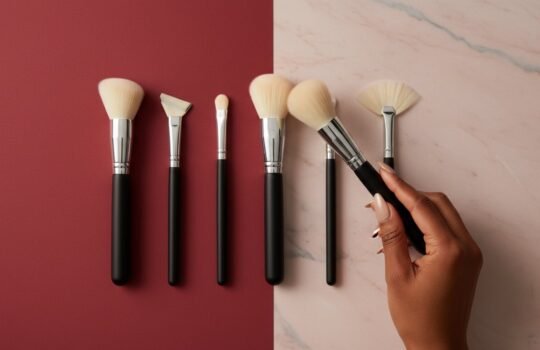
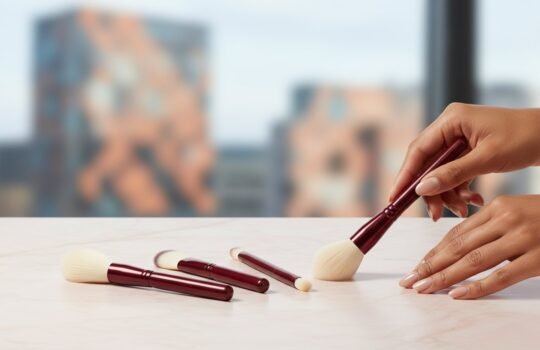
Choosing between a beauty blender vs brush for foundation is a pivotal decision for reactive skin. Brushes, even those made with high-quality hair, can have microscopic sharp edges that irritate the epidermis. Soft, synthetic fibres are superior. They’re non-porous, easier to sanitise, and provide a smoother glide. A sponge with significant “bounce” is essential. It acts as a shock absorber, ensuring the skin isn’t subjected to blunt force during the application process.
The Step-by-Step Sensitive Application
The ritual begins with preparation. A “Skin-First” approach ensures a resilient, hydrated canvas that requires less coverage. This evolution of your routine prioritises health over camouflage.
- Step 1: Cleanse with a non-stripping, pH-balanced wash to remove impurities without disrupting the acid mantle.
- Step 2: Apply a potent, bio-active face cream to seal the barrier. Allow it to settle for at least 180 seconds before introducing colour.
- Step 3: Dampen your Orvyn Beauty Blender with lukewarm water. This creates the ideal environment for applying makeup for sensitive skin uk, ensuring a luminous, low-friction finish.
- Step 4: Set only where necessary. Use a talc-free, finely milled powder to avoid drying out the skin or clogging pores.
True radiance is a synergy of health and art. To elevate your daily ritual, explore our curated collection of application essentials designed for the discerning, conscious consumer.
Beyond the Surface: Evolving Your Sensitive Beauty Routine
A 2023 report published in the British Journal of Dermatology indicated that approximately 71% of adults now self-identify as having sensitive skin. This shift in the UK population demands a move from reactive care to a strategy of resilience. We call this “Skin Evolution.” It’s the process of transitioning your complexion from a state of constant irritation to one of fortified strength. By selecting high-performance makeup for sensitive skin uk, you aren’t just hiding redness; you’re actively participating in your skin’s long-term health.
Consistency in your ritual yields the most profound radiance. A standard skin cell cycle takes roughly 28 days to complete. When you align your morning makeup application with a steady skincare foundation, you provide the continuous nourishment required for the barrier to heal. True beauty is patient. It requires a commitment to ingredients that respect the delicate nature of your face while delivering the clinical results you expect from a luxury brand.
Orvyn maintains a rigorous commitment to ingredient transparency. We believe you deserve to know the science behind your glow. Every bio-active compound and botanical extract is chosen for its potency and its purity. This intersection of clinical elegance and sensory luxury ensures that your beauty routine feels like a mindful ritual rather than a corrective necessity. We provide the data; you experience the transformation.
The Essential Orvyn Duo
The Orvyn Face Cream acts as an ethereal canvas for any look. It deeply hydrates the dermal layers while creating a smooth, protective film on the surface. Following this, the Orvyn Foundation offers a masterclass in high-grade performance. It provides buildable coverage that remains breathable, ensuring that botanical calm is maintained throughout the day. The Orvyn approach to sensitive skin is a synergy of science and serenity.
- Orvyn Face Cream: A bio-active primer that stabilises the skin barrier.
- Orvyn Foundation: A pigment-rich formula that avoids common UK allergens and synthetic fillers.
- Synergy: Together, they create a luminous finish that lasts for up to 12 hours without irritation.
Your Invitation to Radiance
We invite you to unveil your most luminous self through a more intentional beauty collection. Transitioning your kit doesn’t need to happen overnight. Start by replacing your most used products with conscious, skin-loving alternatives. As you remove harsh synthetics and replace them with our refined formulas, you’ll notice a significant decrease in daily inflammation. It’s about curated quality over excessive volume.
The journey to a healthier complexion begins with a single, conscious choice. Elevate your daily experience and embrace a standard of beauty that is both empowering and expert-led. Explore the Orvyn collection today for a refined beauty experience that honours your skin’s unique essence. Your most radiant era is waiting to be discovered.
Cultivating Your Skin Evolution
Navigating the UK’s unique environmental landscape requires a refined approach to beauty. You’ve learned that reactive skin isn’t a limitation; it’s an invitation to choose more intentionally. By prioritising bio-active ingredients over synthetic irritants, you create a protective barrier against urban pollution and unpredictable British weather. A 2022 report in the British Journal of Dermatology highlighted that 70% of women now identify their skin as sensitive, making the transition to conscious, high-performance beauty more essential than ever. It’s about finding the perfect synergy between clinical efficacy and botanical purity.
Your daily routine is more than just application. It’s a ritual of restoration. When you select makeup for sensitive skin uk, you’re investing in the long-term resilience of your complexion. Our clinical-meets-ethereal formulations bridge the gap between scientific precision and sensory luxury. Every potent, bio-active ingredient is chosen to support your skin’s natural evolution, ensuring you don’t have to choose between radiance and comfort.
Unveil your most luminous, resilient skin with the Orvyn collection
Embrace the quiet confidence of a complexion that feels truly understood and exquisitely cared for.
Frequently Asked Questions
Is hypoallergenic makeup better for sensitive skin in the UK?
Hypoallergenic is a marketing term rather than a medical standard. In the UK, no legal regulations govern the use of this label on cosmetic packaging. It suggests a formula is less likely to cause an allergic response, but it doesn’t guarantee safety for every reactive complexion. You should focus on ingredient transparency and independent dermatological testing instead. Look for bio-active formulas that prioritise skin health over vague claims. This ensures your makeup for sensitive skin uk choices are rooted in clinical performance.
Can I wear foundation every day if I have rosacea?
You can wear foundation daily if the formula supports your skin barrier. Select non-comedogenic, breathable bases that contain anti-inflammatory agents like niacinamide. A 2021 study in the Journal of Clinical and Aesthetic Dermatology found that specific dermo-cosmetic foundations can actually improve skin hydration levels. Ensure your application ritual is gentle. Avoid excessive friction to prevent triggering redness or heat. A calm, intentional approach to coverage helps maintain your skin’s long-term equilibrium.
What makeup ingredients should I avoid if I have reactive skin?
Avoid synthetic fragrances, denatured alcohol, and harsh preservatives like Methylisothiazolinone. Fragrance is a primary cause of cosmetic contact dermatitis, affecting approximately 1% to 4% of the general population. Steer clear of bismuth oxychloride, which often causes itching in traditional mineral products. Seek out luminous alternatives that use plant-derived esters. These provide a silky texture without compromising your delicate skin. Prioritising purity in your products is essential for a refined, irritation-free finish.
How do I tell if I am having an allergic reaction or just have sensitive skin?
An allergic reaction involves an immune response such as hives, swelling, or extreme itching that often develops over 24 to 48 hours. Sensitive skin typically reacts immediately with stinging, burning, or temporary redness upon contact with a product. If symptoms persist or spread beyond the application site, it’s likely an allergy. Consult a member of the British Association of Dermatologists for a formal patch test. This clinical clarity helps you curate a safer daily ritual.
Does UK hard water make my skin more sensitive to makeup?
Hard water affects 60% of the UK, particularly in London and the South East. High concentrations of calcium and magnesium raise the skin’s pH, which disrupts the natural acid mantle. This weakened barrier makes your skin more vulnerable to potential irritants found in makeup for sensitive skin uk. Use a gentle, pH-balanced cleanser to neutralise these minerals after washing. This step is a vital part of the science of radiance for those living in hard water areas.
How often should I clean my makeup brushes if I have sensitive skin?
Clean your brushes every 7 days to prevent the accumulation of bacteria and old product. Dirty tools harbour oils and dead skin cells that can trigger breakouts or contact irritations. Use a fragrance-free, professional-grade cleanser to maintain the integrity of the bristles. A 2022 hygiene study revealed that 1 in 5 makeup bags contains significant bacterial growth. Regular sanitisation is an essential part of your skin evolution and ensures every application is pure.
Is mineral makeup always the best choice for sensitivity?
Mineral makeup is not a universal solution for every sensitive complexion. While many formulas are free from synthetic dyes, some contain bismuth oxychloride, which is a known irritant for reactive skin. Other powder formulas may be too drying for those with a compromised moisture barrier. Seek out high-grade, triple-milled powders or bio-active creams. These provide a weightless, luminous finish while respecting the skin’s natural synergy. Focus on how the ingredients interact with your specific needs.
Can I use a beauty blender with sensitive skin?
You can use a damp sponge if you maintain a strict hygiene routine. The moisture in the sponge reduces mechanical friction, which is beneficial for reactive skin types. However, sponges can harbour mould if they aren’t dried in a well-ventilated area. Replace your sponge every 3 months to ensure it remains safe for use. This tool allows for a soft, diffused application. It’s an effective way to unveil a flawless finish without causing unnecessary stress to the skin.