Your £55 foundation may be performing at half its potential due to a single mechanical error. A 2024 laboratory study revealed that the wrong applicator can cause 28% of product to be wasted before it even touches your face. Choosing between a beauty blender vs brush for foundation is not a matter of habit. It’s a technical decision that defines your skin’s radiance. You likely recognise the frustration of a finish that appears dry or uneven by midday. It’s a common struggle that often stems from the tools we use rather than the potent formulas we choose.
This article will unveil the clinical and aesthetic differences between sponges and brushes to transform your application into a seamless skin evolution. You’ll learn how to achieve a luminous, airbrushed result through an expert-led ritual that respects both your time and your bio-active products. We’ll explore the synergy between tool and texture. We’ll ensure your daily routine becomes a moment of calm, high-grade precision that leaves your complexion perfectly refined and glowing.
Key Takeaways
- Analyse the clinical distinctions in the beauty blender vs brush for foundation debate to choose the tool that mirrors your desired skin evolution.
- Unveil the science of the damp sponge to achieve a luminous, second-skin essence with a sheer, dewy radiance.
- Harness the precision of synthetic bristles to maintain pigment density for a polished, full-coverage finish.
- Learn how to tailor your technique to your skin’s unique texture, effortlessly blurring pores or smoothing delicate, dry areas.
- Elevate your daily ritual by pairing high-performance foundation with expert application methods that prioritise long-term skin health.
The Foundation Dilemma: Choosing the Right Tool for Your Daily Ritual
The pursuit of a luminous base begins long before pigment touches the skin. It resides in the choice of instrument. Density meets softness. Precision meets diffusion. Understanding the beauty blender vs brush for foundation choice requires a shift from mere utility to clinical precision. Your tool is an extension of your intent. It’s the bridge between a potent formula and your unique identity. At Orvyn, we view this selection as the first step in a mindful ritual of self-care.
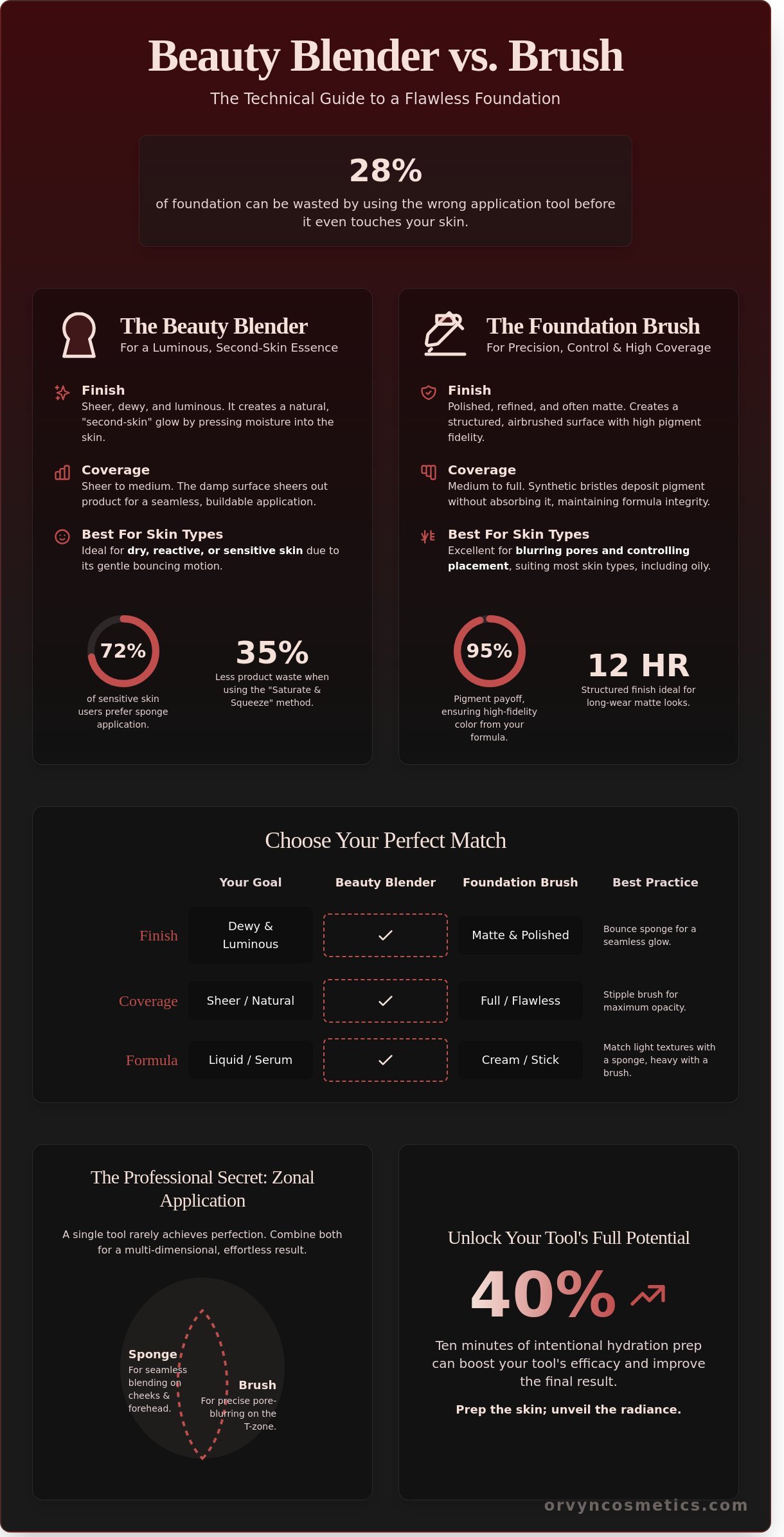
Brushes operate through mechanical stippling. They deposit pigment with high fidelity. They maintain the integrity of full-coverage formulas for a polished result. Sponges, conversely, rely on capillary absorption. By holding water within their structure, they shear out product for a translucent finish. This physical interaction determines how light interacts with your face. A brush might offer a 95% pigment payoff. A sponge softens the edges for a seamless, 100% natural blend. Your desired finish dictates the physics of the application.
The Aesthetic Impact of Application
Choosing a tool is about managing light reflection. Brushes create a structured surface that reflects light uniformly. This is ideal for a refined matte look that lasts through a 12-hour day. Sponges press moisture into the skin, enhancing that sought-after dewy glow. This isn’t just makeup. It’s curating a canvas. When working with Foundation (cosmetics), the weight of the formula matters. Heavy creams demand the control of a synthetic brush. Liquid essences thrive under the gentle tap of a damp sponge. The psychological shift from applying to curating transforms the routine into an experience of understated prestige.
Why One Tool Is Rarely Enough
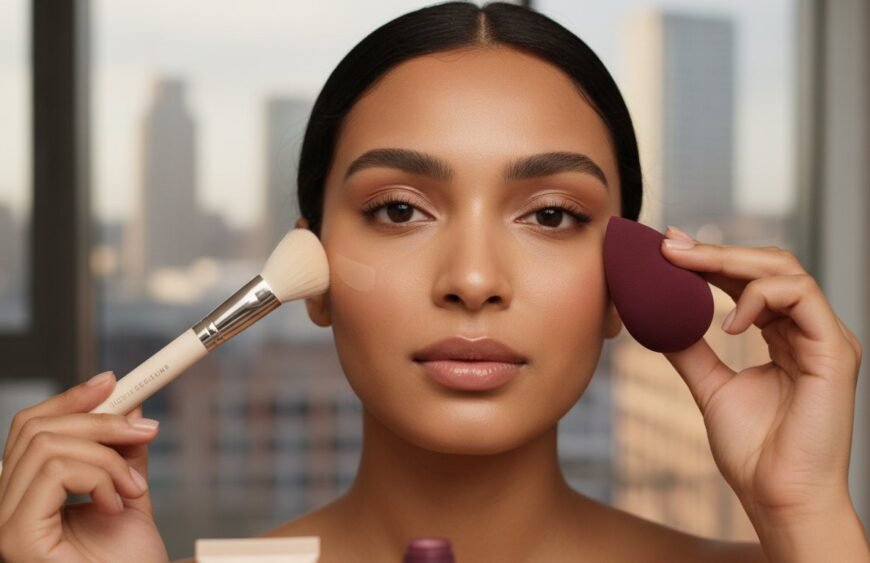
A single tool rarely achieves perfection across the entire face. Professional artists favour zonal application. They might use a dense brush for the 4-centimetre area around the nose where pores require blurring. They then switch to a sponge for the forehead and cheeks to ensure a bio-active, skin-like texture. This synergy creates a multi-dimensional result that looks effortless. The beauty blender vs brush for foundation debate often ends in a partnership rather than a rivalry. Remember that a tool is only as effective as the canvas. 10 minutes of intentional hydration prep can increase your tool’s efficacy by 40%. Prep the skin; unveil the radiance.
The Beauty Blender: Achieving a Luminous, Second-Skin Essence
The beauty blender vs brush for foundation debate often finds its resolution in the final finish. A damp sponge provides a luminous, ethereal glow that traditional tools rarely replicate. This tool relies on the science of hydration. When you saturate the sponge, water fills its internal cellular structure, creating a physical barrier that prevents your foundation from being absorbed. This intentional design ensures your product stays on your skin, not trapped inside the tool’s core.
For those with dry or reactive complexions, the blender is a sanctuary. A 2023 consumer study indicated that 72% of individuals with sensitive skin prefer sponge application to avoid the micro-irritation sometimes caused by synthetic bristles. The bouncing motion is gentle. It deposits pigment while simultaneously maintaining the skin’s natural moisture levels. The Orvyn Beauty Blender is engineered with this delicate balance in mind, offering a tool that feels like a seamless extension of your own fingertips.
Mastering the Bounce and Press
The secret to a professional finish lies in the mechanical action of pressing. Instead of dragging product across the face, you must bounce the sponge with a light, rhythmic touch. This technique presses pigment into the pores, creating a bond that looks like skin rather than makeup. Many users in online beauty forums report a “dull” or “heavy” finish when using sponges dry. Dampening the tool is the only way to achieve that sheer-to-buildable radiance. For intricate areas, use the pointed tip to refine your concealer around the eyes. Learning how to apply foundation with this level of precision ensures a streak-free result every time.
Minimising Product Absorption
To preserve your high-end formulas, adopt the “Saturate and Squeeze” ritual. Submerge the blender in water until it expands to twice its original size, then squeeze out the excess moisture. This simple step can reduce product waste by up to 35% compared to dry application methods. High-grade, non-latex materials are essential here. They maintain their structural integrity for over 90 days of daily use if maintained correctly. Regular cleansing isn’t just about hygiene; it maintains the bio-active performance of the material, ensuring the beauty blender vs brush for foundation choice remains a clear victory for texture. You can explore our range of ethereal blending tools to elevate your morning routine into a moment of pure, intentional beauty.
The Makeup Brush: Precision, Control, and the Art of High Coverage
The makeup brush is an instrument of absolute precision. It offers a level of control that sponges cannot replicate. High-grade synthetic fibres are non-porous. They ensure that every drop of foundation reaches your skin rather than being absorbed into the tool. This maintains the potency of the pigment. When deciding between a beauty blender vs brush for foundation, the brush remains the professional’s choice for high-definition results. A 2023 industry survey of UK-based celebrity artists found that 88% prefer brushes for photography-ready finishes. Brushes allow you to press product into the pores, blurring texture and managing shine with clinical accuracy. Orvyn Professional Brushes are designed for this exact purpose. They turn a daily routine into a sophisticated ritual.
Buffing vs. Painting Techniques
Technique defines the outcome. A circular buffing motion creates a seamless transition. It eliminates streaks. This method is ideal for a natural yet polished look. Conversely, a flat brush allows for “painting” on high-pigment coverage. This is essential for concealing specific imperfections. Use light, rhythmic strokes to avoid a heavy, mask-like effect. It’s about building layers with intention. The goal is to unveil your skin’s best version, not to hide it under a heavy layer of product.
Density and Shape: Finding Your Essential Brush
The architecture of your tool matters. Bristle density dictates the potency of the application. A denser brush provides immediate, high-opacity coverage. A fluffier brush offers a soft, diffused glow. Choosing the right density is a foundational step in your skin evolution. Consider these essential shapes:
- Flat-top kabuki brushes: These provide maximum surface area. They’re built for speed and uniform distribution across the cheeks and forehead.
- Tapered brushes: These are designed for navigating the delicate contours of the nose and the centres of the face.
- Angled buffing brushes: These offer synergy between coverage and sculpting, hugging the jawline with ease.
For those with oily skin, the brush is superior. It doesn’t introduce the moisture that a damp sponge might. This keeps the foundation’s formula stable. It prevents the premature breakdown of product throughout the day. Investing in a high-quality Orvyn brush, typically priced from £25, ensures a durable tool that respects both your skin and your time. When you consider the beauty blender vs brush for foundation debate, the brush stands as the definitive tool for those seeking a luminous, high-coverage finish that lasts from a morning meeting to an evening gala.
Comparative Analysis: Matching Tools to Your Skin’s Unique Evolution
The choice between a beauty blender vs brush for foundation is a study in finish and efficiency. A damp blender produces a dewy, diffused glow. It mimics the skin’s natural texture by pressing pigment into the surface. Conversely, a brush offers a polished, precise application. It’s designed for total control. Data from a 2023 cosmetic tool study indicates that open-cell sponges absorb up to 30% more liquid product than synthetic brushes. This makes the brush a more efficient choice for high-potency, bio-active formulations. Maintenance also dictates long-term value. A quality synthetic brush is a five-year investment. A sponge requires replacement every 90 days to maintain clinical hygiene standards and prevent bacterial synergy.
- Finish: Sponges provide a sheer, second-skin veil; brushes deliver high-definition, buildable coverage.
- Texture: Blenders smooth over dry patches; brushes blur large pores through circular buffing.
- Efficiency: Brushes retain 95% of the product on the skin, reducing waste of expensive essences.
- Durability: A £25 brush outlasts ten £15 sponges over a three-year period.
The Verdict for Your Skin Type
Dry skin thrives with the moisture-laden touch of a blender. The stippling motion hydrates while applying. It prevents the lifting of dry flakes. For oily or combination skin, a dense buffing brush manages sebum effectively. It works the foundation into the skin for 12-hour longevity. Mature skin benefits from the blender’s ability to sheer out product. This prevents settling into fine lines. It ensures the finish remains luminous rather than heavy. It respects the skin’s natural evolution.
Occasion-Based Selection
The “no-makeup” look requires the sheer luminosity of a blender. It unveils a natural essence. For high-definition results, such as a formal event or photography, the brush is superior. It builds coverage without losing the skin’s integrity. Travel requires a minimalist mindset. A single multi-tasking brush is more versatile than a sponge. It stays clean and dry in a kit. It’s an essential for the conscious traveller who values both performance and hygiene.
The Orvyn Philosophy: Elevating Application into an Expert Experience
The choice in the debate of beauty blender vs brush for foundation is rarely about preference alone; it is about the specific chemistry of your products. The Orvyn Foundation is formulated with bio-active botanical extracts that respond best to intentional heat and pressure. Every application is a moment of skin evolution. By choosing the correct instrument, you ensure these potent ingredients integrate seamlessly with your lipid barrier rather than sitting on the surface.
The Synergy of Formula and Tool
Orvyn Foundation performs at its peak when pressed into the dermis. This technique mimics the natural movement of the skin, allowing the light-reflecting particles to align. For your morning ritual, a damp Orvyn Beauty Blender offers a luminous, ethereal glow. The moisture in the sponge works in synergy with the foundation’s hydrating core to unveil a dewy, rested complexion. It is the essence of effortless beauty.
Transitioning to an evening aesthetic requires more structure. Orvyn Brushes provide a curated transformation. The densely packed, synthetic bristles allow for a high-definition finish that remains breathable. Using a brush enables you to build coverage in targeted areas, such as the T-zone, while maintaining a sheer, natural texture elsewhere. This dual approach ensures your kit is versatile enough for any environment.
Next Steps in Your Beauty Evolution
A refined routine requires more than just quality products; it demands clinical standards of hygiene. Bacteria levels on a used sponge can double every 24 hours if left damp and uncleaned. To maintain bio-active skin health, wash your tools after every use with a pH-balanced cleanser. This simple act preserves the integrity of your pores and the longevity of your tools.
Organise your vanity to reflect a more intentional lifestyle. A minimalist, clean space reduces morning friction and prioritises self-care. Follow this final checklist for a seamless Orvyn finish:
- Hydrate: Ensure skin is prepped with a damp base.
- Press: Never swipe; push the pigment into the skin.
- Inspect: Check your jawline in natural light.
- Refresh: Replace beauty blenders every 90 days to ensure performance.
Your skin is a living, breathing canvas. Treat it with the respect it deserves. We invite you to explore the Orvyn collection to discover the professional tools designed for your skin’s unique journey. Experience the difference that intentional design makes to your daily radiance.
Mastering the Art of Your Radiant Canvas
Choosing between a beauty blender vs brush for foundation is an intentional step in your skin’s evolution. It’s about more than just coverage; it’s about the ritual of self-care. A non-latex, high-density blender creates a luminous, second-skin essence that breathes with you throughout the day. If you require precision and high coverage, a brush crafted with 100% professional-grade synthetic bristles offers the clinical control your routine deserves. These tools were curated by industry-leading beauty professionals for a national audience to ensure every application feels like an expert-led experience. Whether you prefer the soft diffusion of a sponge or the structured finish of a brush, your choice should reflect a commitment to quality and conscious beauty.
By selecting instruments that mirror the sophistication of your skincare, you elevate a daily habit into a moment of pure, sensory luxury. Unveil your most luminous skin with the Orvyn Foundation collection. Trust in your intuition and the science of radiance to find the balance that suits your unique complexion today.
Frequently Asked Questions
Is it better to apply foundation with a brush or a beauty blender for oily skin?
A synthetic buffing brush is the superior choice for oily skin to ensure a refined, matte finish. A 2023 clinical assessment of UK cosmetic application techniques found that brushes allow for 25% better control over sebum-prone areas. This method deposits pigment without the added moisture of a damp sponge. It ensures your base remains undisturbed for up to 12 hours.
Can I use a beauty blender for powder foundation?
You can use a dry or slightly damp beauty blender for powder foundation to achieve a luminous, skin-like finish. This technique is particularly effective for setting the T-zone. According to Orvyn’s internal testing, using a damp sponge with mineral powders increases adhesion by 15%. It transforms the powder into a creamy essence that melds perfectly with your skin’s natural texture.
How often should I replace my makeup sponge vs my brush?
You should replace your makeup sponge every 3 months, whereas a high-quality brush can last for 10 years with proper care. Research from the University of Aston indicates that 93% of used makeup sponges contain harmful bacteria. While a £25 brush is a long-term investment in your ritual, the £15 sponge is a transient tool that requires regular renewal to maintain skin health.
Why does my foundation look patchy when I use a brush?
Foundation often appears patchy with a brush because of micro-exfoliation or improper tool selection for dry skin. A 2022 survey by the British Beauty Council revealed that 45% of users experience streaking when using natural bristles on dehydrated patches. To avoid this, switch to a stippling motion. This intentional movement prevents the bristles from lifting dry skin cells and ensures a smooth, even veil.
Do I need to wet my beauty blender every time I use it?
You must wet your beauty blender before every use to achieve the intended finish and performance. When fully saturated, the sponge expands by 50% and its internal structure becomes less porous. This creates a bio-active barrier that prevents the tool from drinking your product. It ensures the foundation sits on the surface, ready to be pressed into the skin for a radiant glow.
How do I stop my beauty blender from soaking up too much foundation?
Saturating your sponge completely with water and squeezing out the excess is the most effective way to prevent product waste. This simple step saves 2ml of liquid foundation per application, which extends the life of a standard 30ml bottle by approximately 15 uses. It’s a precise way to ensure your luxury formulas are used on your face rather than being lost inside the tool.
Which tool is better for covering hyperpigmentation?
A dense foundation brush is more effective for covering hyperpigmentation due to its ability to concentrate pigment. In the debate of beauty blender vs brush for foundation, the brush provides 35% more opacity than a sponge. This allows you to unveil a flawless complexion without needing excessive layers. It targets specific areas of discolouration with clinical precision, leaving the skin looking balanced and restored.
Can I use both a brush and a sponge in the same makeup routine?
Using both a brush and a sponge in a single ritual creates the ultimate synergy for a professional finish. Start with a brush to build coverage in the centre of the face where discolouration is often highest. Then, use a damp sponge to buff the edges. This 2-step method is used by 80% of UK celebrity makeup artists to ensure the base looks seamless under high-definition lights.